This market update highlights the continued strength of insurer capacity and competition, supporting lower premiums, broader coverage and more favourable terms across many classes of insurance. It also considers the increasing importance of risk quality, governance, claims performance and the quality of information provided at renewal.
The following key takeaways provide a snapshot of the major market trends and considerations for organisations as we move into the second half of 2026.
2026 Insurance Market Update - Key Takeaways
A Mid-Year Review of Insurance Market Conditions
Earlier this year, CRIS reported that strong insurer profitability, abundant capital and increasing competition were likely to support favourable insurance conditions throughout 2026. Six months on, that outlook has largely materialised.
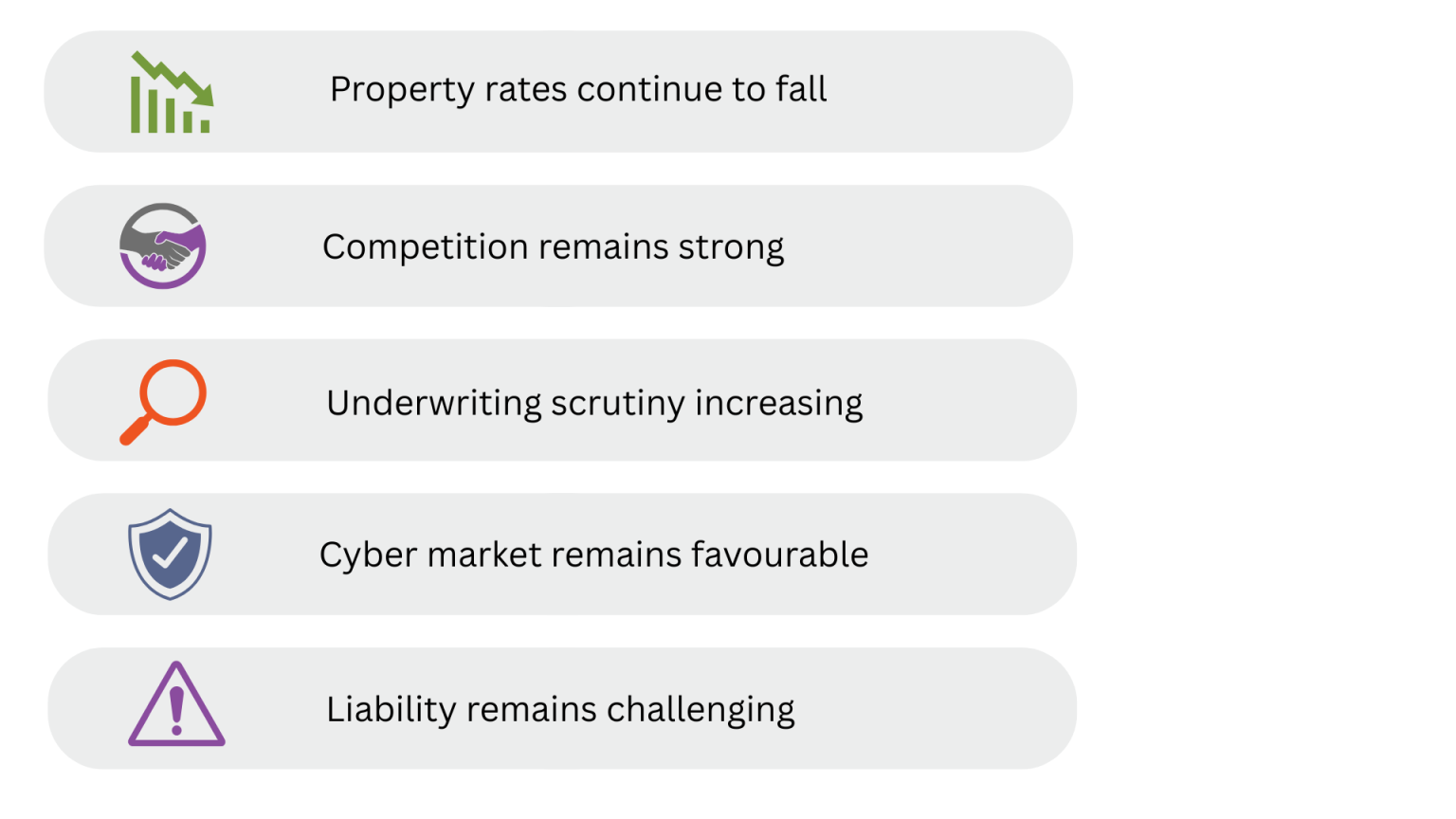
Market conditions remain favourable across most classes of insurance and the buyer’s market has strengthened further. Competition continues to drive premium reductions, broader coverage and improved negotiating conditions for many organisations. However, a clear theme is emerging – while the market is broadly soft, outcomes are becoming increasingly dependent on risk quality, governance, data quality and claims performance.
The Market Has Softened Further
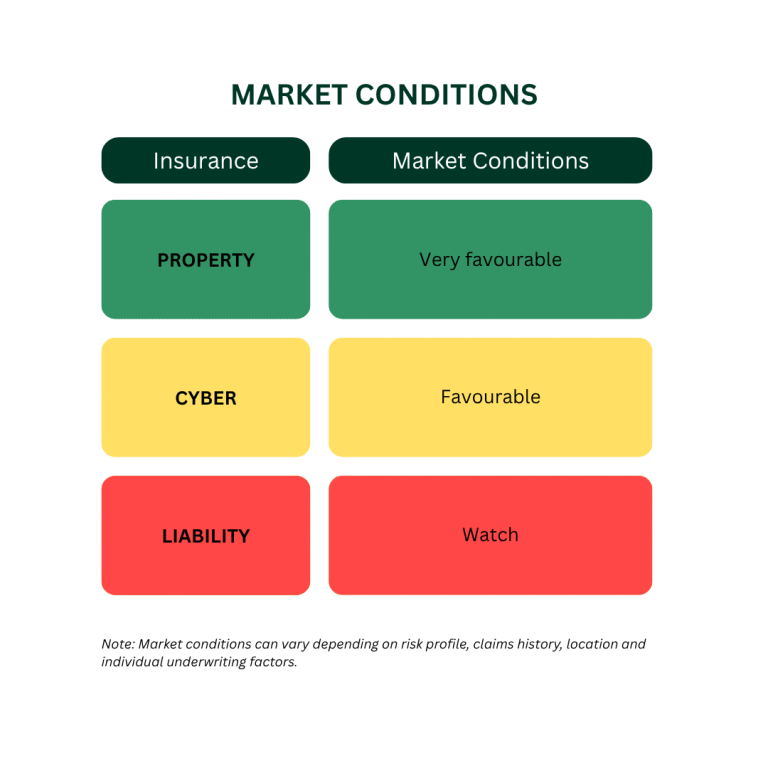
Insurance markets have continued to soften through the first half of 2026. Global commercial insurance rates declined again during the second quarter, marking the eighth consecutive quarter of rate reductions. Property continues to experience the strongest downward pricing pressure, supported by abundant insurer capacity, strong profitability and increased competition. Liability classes remain the primary exception, with insurers continuing to monitor claim severity and social inflation concerns closely.
In practical terms, two organisations operating in the same sector can now experience very different renewal outcomes. Well-managed risks with strong governance and credible risk controls continue to attract competition and favourable terms. Organisations with adverse claims experience, ageing assets, incomplete asset information or unmanaged emerging risks are likely to see fewer benefits from the broader softening market.
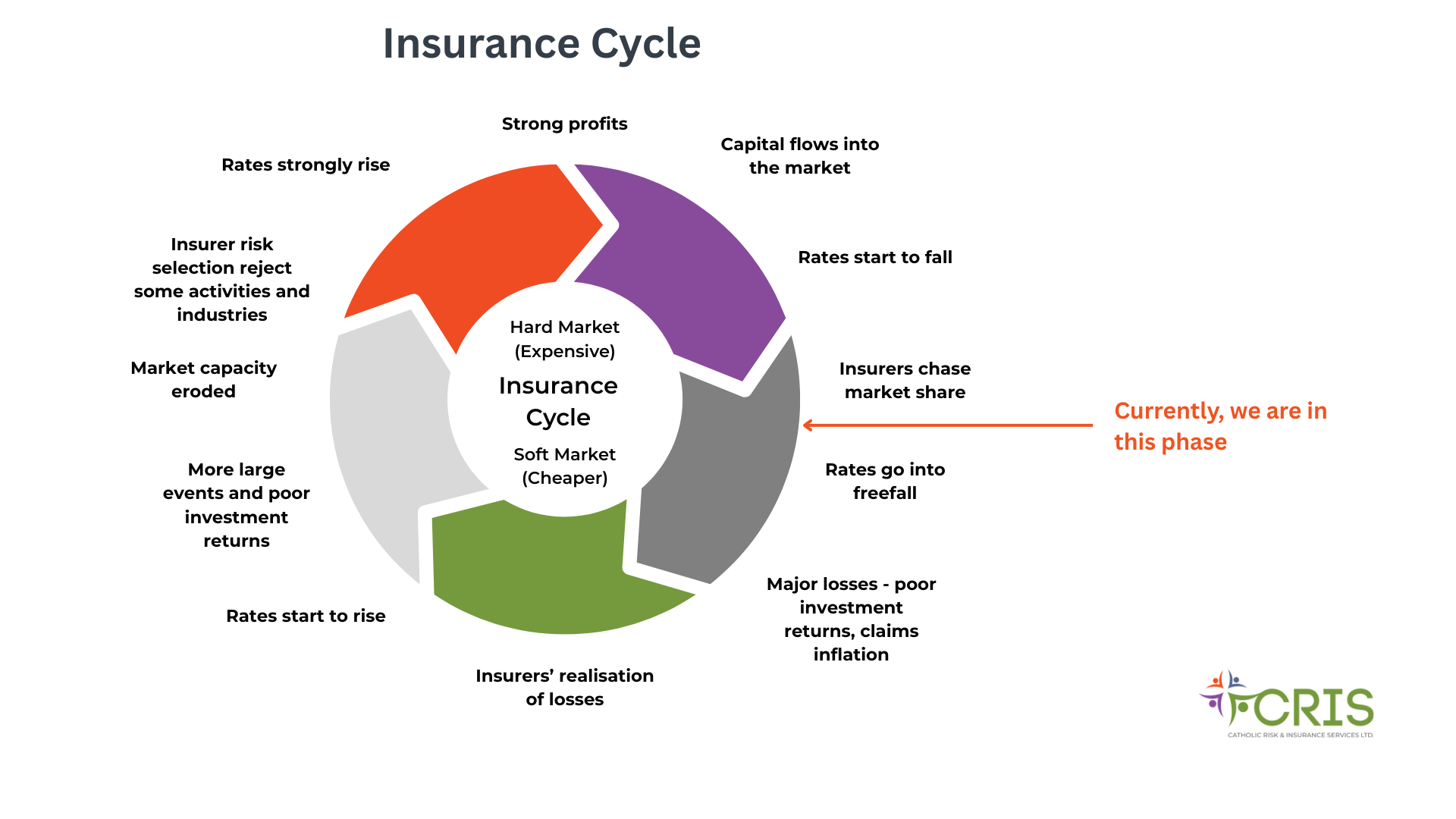
Insurance markets remain cyclical. While current conditions are highly competitive, history shows that periods of falling rates and abundant capacity are often followed by sharp corrections when catastrophe activity increases, claims costs deteriorate or investment returns soften. Insurers ultimately return to technical pricing, tighter terms and reduced capacity. For this reason, CRIS advocates using favourable market conditions to proactively reduce future pricing volatility rather than simply focusing on short-term savings.
The Market Is Softer – The Risks Are Not
Perhaps the most important observation emerging from current market commentary is that lower premiums do not necessarily mean lower risk.
Many of the underlying exposures affecting organisations continue to intensify. Climate-related catastrophe losses, litigation trends, psychological injury claims, cyber threats, geopolitical instability, supply chain disruption and rising replacement costs remain significant challenges. Current pricing conditions are being driven largely by strong competition, and insurer appetite for growth rather than any meaningful reduction in underlying risk.
Property Remains the Most Competitive Class
Property insurance continues to be one of the most competitive classes within the market. A noticeable flight to quality has emerged, with insurers increasingly directing capacity toward organisations that can demonstrate strong risk management, sound governance and comprehensive, current underwriting data.
That said, insurers remain cautious regarding exposures to cyclone, flood, bushfire and hail. Catastrophe-sensitive risks continue to receive scrutiny, particularly where valuations are outdated or risk controls are not well documented. Although pricing remains favourable, underinsurance continues to emerge as a significant concern as replacement costs and rebuilding expenses remain elevated.
Liability Remains the Key Watchpoint
Liability classes remain the primary area of concern across the insurance market.
While capacity remains available and competition exists for quality risks, insurers continue to monitor legal and claims trends carefully. Social inflation, litigation funding, increasing legal costs, psychological injury claims and long-tail liability exposures remain key concerns influencing insurer appetite and pricing decisions.
For many organisations, liability outcomes are becoming more closely aligned to underlying risk quality. Risks involving significant public interaction, complex exposures or poor claims experience are attracting greater underwriting scrutiny.
In the Safeguarding market, the increasing number of international insurers now operating in Australia is beginning to challenge traditional insurer offerings and should continue to improve competition and coverage options for well-managed risks.
Cyber Remains Competitive, But Risk Is Changing
Cyber insurance continues to benefit from strong market competition and increasing capacity.
However, the risk environment itself is becoming more complex. The evolution of AI, increasingly sophisticated cyber-attacks and growing regulatory expectations are changing the way insurers assess cyber risk. While pricing remains favourable in many cases, insurers continue to focus on cyber maturity, incident response capability and organisational resilience when evaluating risks.
The message for organisations remains consistent. Favourable cyber insurance outcomes are increasingly dependent on demonstrating effective cyber governance and practical resilience measures rather than simply purchasing cover.
Opportunities for Members
Current conditions provide an opportunity to achieve more than short-term premium savings.
Members should consider using the current environment to:
- Review policy wordings and negotiate broader coverage where appropriate.
- Reassess deductibles, limits and programme structure.
- Validate property valuations and replacement cost assumptions.
- Review business continuity, catastrophe response and cyber resilience plans.
- Strengthen governance, safeguarding and incident management frameworks.
- Improve the quality of data presented to insurers at renewal.
- Build stronger long-term relationships with insurers that demonstrate claims expertise and sector understanding.
Historically, organisations that focus solely on securing the lowest premium during soft markets often experience greater volatility when conditions inevitably change. A more sustainable approach is to use favourable market conditions to improve programme quality, strengthen negotiating position and reduce future uncertainty.
CRIS's View
The key message from current market commentary is straightforward, conditions remain favourable, but insurers are becoming increasingly selective.
Premium savings remain available, but the greatest value may lie in improving coverage, strengthening insurer relationships and enhancing the overall quality of your insurance programmes while competition remains strong.
As we move into the second half of 2026, organisations should look beyond annual premium outcomes and consider how current market conditions can be used to improve long-term resilience. The organisations best positioned for success will be those that use favourable conditions to strengthen their overall risk profile, reduce future volatility and build sustainable insurance arrangements that can perform consistently across changing market conditions.
“The current market presents an opportunity not only to reduce premiums, but to strengthen insurance programmes, improve resilience and secure sustainable long-term outcomes.”